Pages

Tuesday, August 20, 2013

Ten Commandments

This is a sermon that Elizabeth and I preached together about the Ten Commandments as part of our summer sermon series on Exodus.  I was unable to cut out very much because the sermon is somewhat abstract going between narratives and explanations.  I apologize for the length!

Elizabeth:
Dr. Sibley Towner, Old Testament scholar and long time professor at Union Presbyterian Seminary in Richmond, observes:

In function, the 10 Commandments can be compared to 10 posts supporting the fence which separates the viable community of Israelites from the marauding beasts of disorder, confusion, and bloodshed howling beyond.

The commandments are rooted in relationship, born of God’s love for the people of Israel.  The covenant keeping God of Abraham and Sarah, of Isaac and Rebekah, speaks a wilderness word of promise to Moses: “Now therefore, if you obey my voice and keep my covenant, you shall be my treasured possession out of all the people.  Indeed, the whole earth is mine, but you shall be for me a priestly kingdom and a holy nation.”  And so the first word of the commandments matters most of all: “I am the Lord your God.”

Matt:
The man stands in a great crowd of people. On all four sides, he feels the pressure of shoulders pressed against him. He breathes in the scent of the hair of the person standing in front of him, and feels a breath on the back of his neck. He pictures himself as a brick in a wall - mortared in on all sides by the bricks around him.
 
He senses a change. The deafening silence has become thicker. Suddenly, slowly, the motion begins. The brick-wall crowd begins to move.

Pressed in on all sides, the man has no choice but to move along with his fellow bricks. But something is wrong. Before him, through the heads of the crowd, he can only see darkness, made more obvious by a light which warms his back.

The man now feels frightened and alone. He is being pulled unwillingly into darkness.

The man decides what he must do: he must stop. Instead of allowing himself to be buffeted and pushed, shoved and pulled into the darkness, he must plant his feet. He sets his feet firmly on the ground.

The people behind him begin to make their way around the standing-still man, like a river flowing around a stubborn stone.

With the throng passing him by, he knows that he is not just another one of those bricks. There is something that makes him different from the wall of which he is a part.


The gift God gives helps us live in the world from which we are different. The world moves, jostles, and swells toward destructive powers: selfishness, greed, narcissism. But our God tells us that the life of the other is just as important as our own. Our God tells us that we need not lust after that which our neighbor has, but rejoice in our relationships. Our God reminds us to celebrate the Lord and to share our joy.

Though we are a part of this world, though we are bricks in the wall, we are not conformed to this world. Left to our own devices we will do what comes naturally to us: the human things - the things of this world. But we are transformed with the words, “I am the Lord your God.”


Elizabeth:
First we were family.  Then we were slaves.   Joseph welcomed us. But Pharaoh exercised his power to diminish us.  He tried to kill our boy babies. He made us his slaves.  He expected more and more from us.  He offered less and less to us.  We worked all day and much of the night.  It was never enough.  Our backs ached with the effort.  We wanted out. Pharaoh’s heart was hardened.  Moses could not convince him to let us leave.  The battle of mind and will between  them was intractable.  When Pharaoh’s first born was killed, things changed.  He wanted us gone---no longer to be reminded of our God.  But leaving wasn’t easy.  Pharaoh and his army pursued us.  We were terrified.  If only we could cross the Red Sea, we would be free.   The chariots of the powerful Pharaoh bore down on us. It looked as if we would be killed.  But, the Lord drove back the sea.  The waters were divided.  We walked across the sea on dry land.  God’s power saved us.  We rejoiced.  Our celebration was short lived. Had we been saved only to die in the wilderness?  We grew impatient with Moses, angry with God.  The wilderness stretched in every direction.  We were weary.  We wept for lack of food, for want of water, for fear of the future.  


Into fear, God speaks a word.  Peace.  Into oppression, God speaks a word. Freedom.  Into confusion, God speaks a word.  Order.  Into hunger, God speaks.   Bread of life.  Into thirst, God pours living water. Into our wilderness, God speaks a word.  Presence.  Into the chaos, God speaks a word.  Community.  And the first of all these words is simply, I am the Lord your God.  That is enough.  The mercy of the Lord is from everlasting to everlasting


Matt:
She boarded the bus without pretense. She has simply come to the end of a long day, and her aching feet were tired of the pressure. She placed her money in the round glass jar. She turned to her left and looked down the long aisle toward the back of the bus.

She knew that she should make the long march to the back of the bus. She knew that the path of least resistance lay in the long trod between the plastic benches. But as she placed one foot in front of the other to begin the trek, she noticed an empty seat only halfway down on her right. Her body screamed out to her to settle herself in the closest seat she could. Her feet begged her to shorten the journey and allow them to rest. She wiped her gloved hand against her forehead brushing the cool sweat off of her dark skin.

She shuffled her feet to the middle of the bus, halted, and turned. People began to notice that she had stopped her progress down the aisle. They nudged their neighbors, pointing toward the woman. The bus took a collective breath in and held it.

She turned around and scootched back until the backs of her legs pressed against the bright green plastic seat. When she felt the pressure of the seat against the backs of her knees, Rosa settled down into the seat, feeling a flood of relief wash over her. The years of pressure seemed to lift off of her feet, off of her back, off of her shoulders, and off of her soul. She looked at the pale-skinned man in front of her and said, "Evenin'.”


Do not murder, do not commit adultery, do not steal. A bond is created which connects each one of us. It goes deeper than murder, it goes deeper than respecting property.

Buried in this bond is the demand that we all deserve the right to be treated as children of God. And the responsibility to maintain these rights lies on our shoulders. As the children of God who have received this gift, it is our responsibility to treat our neighbors with love and respect. It is our responsibility to make sure that our neighbors treat each other well. When we witness those who are beaten down, when we witness those who are disadvantaged, when we witness those whose souls are being murdered, adulterated, or stolen. It is our responsibility to bring them inside the fence of justice. A justice created with the words, “I am the Lord your God.”


Matt:
To begin with, there is darkness. An all-encompassing darkness. It covers all that which does not exist. It covers the very face of the deep. And into this darkness,

God speaks the thing, the only thing, which can overcome this darkness: light. God speaks a light that creeps into every nook, every cranny. As darkness has covered the face of the deep, that face is lit up in the basking glow of the light which God creates. Out of the nothingness, out of the darkness, out of the emptiness, God makes that which defies nothing: everything.

God creates a heaven, God creates an earth. God creates oceans and lands, seas and mountains. God creates trees and ferns, flowers, vines, fruits, and grass. God creates the flying fowl, the swimming sea creatures, the crawling critters, roaming beasts, every living creature. God even creates the humans, the people. God's creation swells and grows, it moves and shifts, it moans, it groans. It seems to know no bounds. God's creativity expands beyond the comprehension of any piece of the creation. The bounds of this creation know no end.

Elizabeth:
They enter.  Some quietly, tentatively. Others with confidence.  For them, this is a place as familiar as home. Some speak to those around them.  One person moves toward another,  speaking in the low voice of concern.  And there are celebrations, too---hugs and high fives and a welcome refrain, I’m so glad to see you. There, a woman sits in silence, eyes downcast, as if the thing she has come for has little to do with the others. They all sit and wait.   Children smile at their friends, they fidget, they speak in a stage whisper.  If you know them, you may wonder what these people, who come alone or with another, have in common.  You know this area.  You’ve seen the news.  It is not politics, or age or race that bind this group.  It is not gender or socio economic level or experience that bind them to one another.  It is not educational status or career goal or worldview.  And yet, they speak with a single voice.  They sit and stand as one. They share a language.  They share a table. They share a culture.  Their language is faith.  Their table belongs to the Lord Jesus Christ.  The creating God binds them together.  The covenant keeping God holds them when they disagree.  Their voice is one---thy kingdom come, thy will be done.
 
The commandments belong to this community.   It is to the people of God that the commandments are given.  It is for the people of God that the commandments exist---not for divine finger wagging or moral hand slapping.   The commandments are gift.  They free us to live as God’s people---to be a  community that embodies the life of Christ----generously loving, faithfully sharing, creating life, health and wholeness in the face of the world’s death and destruction.   The promise of the creator God is sure, I am the Lord, your God.

Elizabeth:
Hands trembling, hearts full, they face each other. Friends and family look on with glistening eyes. The two pledge their love to each other---for a lifetime.   Their promises are rooted in their strong belief that God has brought them together---that God is the author of their relationship.   Theirs is a covenant relationship.   Those watching know things will not work out as well as they hope.   There will be disappointments, failures, loss, trials . . . and long stretches of wilderness.  On some days, they will forget to show mercy to one another.  On other days, they will grow weary with the tedium of marriage.  There will be temptations from within and from without. They will fail to practice kindness and forgiveness.   Somedays they will wonder how it all happened.  But God will not fail them.   The creator of the covenant is also the sustainer of the covenant.  The one who has chosen them and led them to each other, will prevail.   God’s love will transform their relationship.  God’s love will permit them to embody love to those who do not understand the law.  

The law is one of God’s enduring gifts.  In the thirteenth chapter of Romans, the apostle Paul summarizes the entire law like this:  Love your neighbor as yourself.   Love does no wrong to a neighbor; therefore, love is the fulfilling of the law.

In function, the 10 Commandments can be compared to 10 posts supporting the fence which separates the viable community of Israelites, of Christians, of you and me, from the marauding beasts of disorder, confusion, and bloodshed howling beyond.

Wednesday, August 14, 2013

American Idol

This is a sermon that I preached on August 11th.  It is the second-to-last sermon that we are preaching in our summer sermon series about the book of Exodus.

The wandering Israelite community lays encamped at the foot of Mount Sinai. Moses goes up into the fire and clouds to converse with God. After the trials and tribulations that this community has faced – slavery in Egypt, fear of being captured, the spectacle of the Red Sea, the starving wilderness – these released captives wait at the bottom of the mountain. And what happens next? The Israelites construct an idol out of gold and begin to break God's commandments just as quickly as they can. 

Let's back up a little bit.

The Israelites come to Mount Sinai and Moses goes up on the mountain. We'll say that while Moses is on top of the mountain, he's upstairs, and the Israelites stay downstairs, at the foot. Upstairs, Moses is receiving the Ten Commandments. He's being given the laws of God and other information regarding the construction of the tabernacle.
15...10 Commandments.

So the Israelites sit downstairs, looking up at all of this fire and smoke going on upstairs, and they start to wonder if Moses is ever planning on coming back down. They think that maybe Moses had abandoned them, or he might have died. Whatever happened to Moses, he is not connected to the people, and therefore the people do not feel connected to God.

So they build an idol, and begin worshiping it.

The people understand Moses as their connection, their go-between with God. And now that they lost this visual representation of God, now that God became more abstract to them, they lose their nerve. They feel that there is an empty space in their lives which God no longer fills. They decide to fill that space up with something they can grasp, something accessible.

So the Israelites turn to Aaron, the second in command and convince him to build an idol in the shape of a calf. But this calf stand against everything that God is telling Moses upstairs. This idol is everything which God is not:
  • This calf is a tangible object that the Israelites can touch and interact with. 
  • The idol is visible, whereas the God which truly brought them out of Egypt is invisible. 
  • Yahweh is capable of communicating with the community, while this idol sits there and does nothing.

These are the reasons God becomes angry when the golden calf is built. They try to domesticate God. They try to make God something that they can touch, and understand, but that is not who or what God is.


The demands by God are made into a world of unacknowledged polytheism. This is the world that we live in - a world of unacknowledged polytheism. We don’t want to admit that there are many gods present in our lives other than the Lord, but they are there. Whether we recognize them as such, we have many alternatives outside of God. We have many other offers of joy. Many other places we could turn for security. Many other demonstrations of love.

In our pursuit of joy, we may choose Bacchus, the god of wine. We may turn to material items. Things and stuff we can gather up. If we take a look at advertising, I think it's pretty clear that this is something we're very prone to. Rather than turning to God to derive our true pleasure, we may place the pursuits of this world - the distractions - first.

In the pursuit of security we may chose Ares, the god of war. We as a people so often resort to violence and mistrust. We seem more willing to cut our spending for education than to cut our spending for defense. Rather than trusting in God to protect us and learning what it truly means to love our enemies, we build our walls higher and our guns bigger.

 In the pursuit of true love we may choose Eros - the god of lust. We place ourselves in unhealthy relationships. We seek satisfaction in relationships of shallow, mutual benefit rather than trusting in God’s unconditional love as the model for our love.

The barrage of gods which assail us are not Roman or Greek figures, they are the lure of that which is not the Lord. They are the things of this world which stand in for the wonderful aspects of God's covenant. They are the things that we use to distract ourselves from serving God and fully engaging God in the covenant.

The reason these gods are so tricky, the reason that we are susceptible to making these things into idols is because they are not inherently bad things. They can even be good things until they stand in the place which is reserved for God.

We can become fueled by our desire to make more money for the sake of being wealthy rather than for the sake of supporting our families and being contributing parts of God’s kingdom.

We may care more about power for the sake of power, rather than the opportunity power gives us to influence others for the sake of good.
Yum.

Food can be one of the easiest gods to bow down to when we care more about how good it tastes or how fancy it looks than the fact that so few people have access to it.


As the Israelites sit downstairs at the bottom of that mountain, they discover something that we have also discovered, faith in God is not easy. With all of these other gods vying for our attention, with all of these other opportunities for worship presenting themselves, it is a risky thing to be faithful to God. The Israelites could not tolerate that risk of faith, and they succumbed to the god that they could control, the god that did what they wanted.


Our call is to tolerate that risk of faith. Our call is to trust in the true God, not the god we create. There will be times we will fail. There will be times when money is what we worship, or war is what we rely upon, or fragile human relationships are the connections that we trust. But the promise of the Lord is the promise to unconditionally love us, To encourage us to set aside the gods of this world, and to tolerate the risk of faith.

Tuesday, June 25, 2013

Oppression

We are preaching a sermon series on the Exodus this summer. I preached this sermon on Sunday, June 23rd about the oppression of the Israelites in Egypt as told in Exodus 5:1-18. I apologize for the length of this one, but I had a tough time cutting stuff out!


Scripture continues to tell us the story of the plight of the Israelites. While Moses has been in the wilderness making a new life for himself, the Israelites have remained enslaved in Egypt. They have been forced to labor for the Egyptians, serving at their will and whim.

Many scholars believe that the Pharaoh of Egypt at the time of the Exodus would most likely have been Ramses II. One of the reasons this is important is because Ramses was obsessed with building and construction. He filled all of Egypt with new towns and, more importantly, statues of himself. It is very possible that many of the great works of Egyptians were built on the backs of the Israelites.

The Israelites find themselves bound in slavery in Egypt subject to the will of cruel taskmasters following the will of the Pharaoh. Upon their return to Egypt, Moses and Aaron go before Pharaoh to ask him to allow the people of Israel to go into the wilderness in order to make sacrifices to their God. Pharaoh responds cruelly. Not only does he deny them the opportunity to go, but he reacts by punishing all of the Israelites.
Why does Pharaoh react so cruelly? What is it about going into the wilderness to worship Yahweh that he is so angry about?

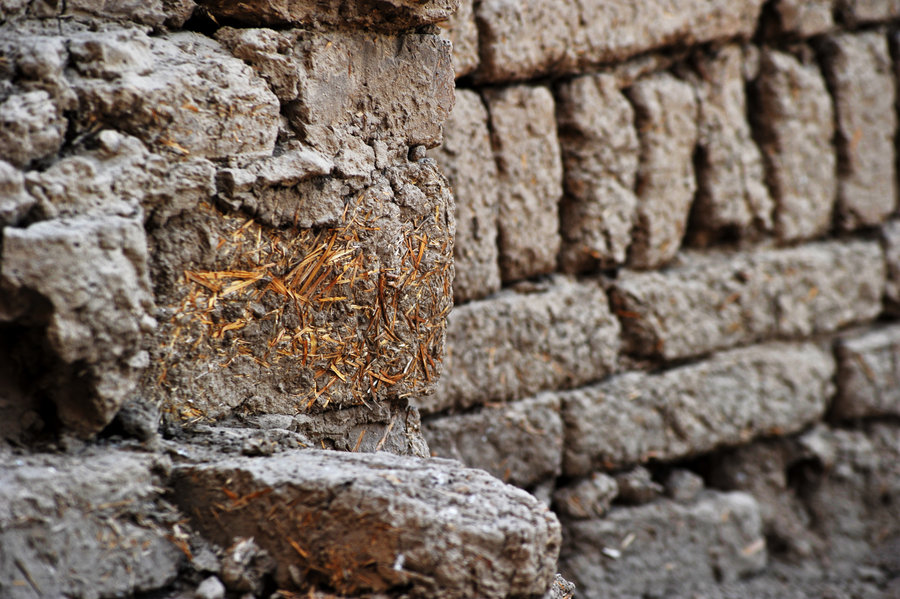
In order for the Israelites to make the bricks that were used as building materials for all of the Pharaoh’s construction projects, they had to mix straw with mud. Up until this point, the straw had been provided for the Israelites.

But it is now Pharaoh’s decree that the Israelites will no longer be provided straw; they will now have to harvest their own straw. This may not sound like much of a burden, but they are being required to produce bricks at the same rate as they were being required to before. They must add a significant amount of work to their load while remaining as efficient as they had before.

The punishment the Pharaoh orders of the Israelites makes their task impossible. It is impossible for them to produce the same number of bricks while being forced to do twice as much labor. It is a subversive punishment, it is an oppressive punishment, and it is intended to dishearten the Israelites. To break them. This is oppression in a very real and palpable sense.

It initially seems strange to me that he should choose to punish the Israelites through labor. But as I think about it, I’m really not that surprised. There have been many groups of people throughout history who have been oppressed through the use of labor. Have been forced into a subservient role in society through the means of manual labor.

This image looms before me in my mind’s eye. A multitude of people are unloaded from train cars and shoved and prodded into a line. They are forced to march through an opening in a fence into a camp in which most of them will die due to exhaustion, overexertion, and starvation. This is a Nazi concentration camp. As they march through the gates into this place of horrors, three words loom overhead, cast into the iron. Arbeit macht frei. Work makes (you) free.

These were the words written at the gates of many Nazi concentration camps, including Auschwitz – one of the most terrifying. The phrase is almost as sickening as the knowledge of what happened to the poor people who were forced into those camps. There was an illusion created that, by working hard, the Jews would know freedom. The implication is that if you worked hard enough, you would be released. But I can’t imagine that any Jew in those camps believed that. It’s disturbingly ironic that the Nazis essentially did to the Jews the same thing that Pharaoh had done to them over 3000 years earlier.

But these are not the only instances of oppression in the world throughout history. Up until the mid-1960s, race relations in this country were overtly oppressive. The concept of “separate, but equal” was largely a farce that hid the problem of oppression of blacks. Through backhanded preference and exclusion to outright oppressive actions, African Americans in this country faced the heavy yoke of oppression. Martin Luther King Jr. described this oppression the best – I could actually just write this entire sermon with MLK Jr. quotes. He said that America was, "sweltering with the heat of injustice, sweltering with the heat of oppression."

And oppression has not just happened “back there” in time, or “out there” in location. It’s something that happens here and now. It’s something that happens to our friends, our neighbors, our spouses, our children, our parents. There is evidence of oppression all around us.

The number of young people who killed themselves last year because of who they are, and what kind of person they fall in love with is simply staggering. This is evidence of oppression.

The number of young people who hurt themselves or starve themselves because they want to look like a picture in a magazine – a picture of someone who doesn’t even truly exist but was airbrushed onto the page, is just astounding. This is evidence of oppression.

These are forms of oppression; these are the ways that vulnerable people in our society are being oppressed.

And as often as we are the victims of this oppression, as often as we feel that pain and the hurt, so also we are the ones who inflict that oppression. As often as we see ourselves as the Israelites, we can turn around to discover that we are the Egyptians.


Two months ago, there was a tragedy in a far-away land that shook that nation and rocked the entire world. On April 23, workers in the commercial building Rana Plaza in the capital noticed that some cracks had formed on the inside of the gigantic structure. The workers were sent home. Banks, shops, and apartments were immediately closed, but clothing workers in the building were required to come in to work the next day.

On April 24th, the entire building collapsed due to structural damages. Witnesses said that the building looked as though it had suffered a violent earthquake. It was confirmed that 3,122 workers were in the building at the time of the collapse, and a rescue effort was immediately launched which lasted almost a month. During the course of that rescue effort, heros were born, and miracles were performed. More than 2,000 people were rescued from the rubble.

Yet, in the midst of the wonderful stories of rescues, the death toll began to climb: 200, 400, 700. After all was said and done, approximately 1,127 people were killed in the tragedy of the building collapse in Bangladesh.

There were many responses to this tragedy: sadness, disbelief, confusion. But perhaps the most appropriate was anger. How could this have happened? What is the cause behind such a terrible tragedy? There are experts who say that the cause behind this tragedy is exploitation and oppression gone rampant. It is unclear which clothing companies this factory supported, but ties have been made to many of the clothing retailers that we are familiar with on an everyday basis. 

Why clothing companies?
Scott Nova, executive director of Workers Rights Consortium, a labor rights organization says, “the real power lies with Western brands and retailers beginning with the biggest players: Walmart, H&M, Inditex, Gap and others…The price pressure these buyers put on factories undermines any prospect that factories will undertake the costly repairs and renovations that are necessary to make these buildings safe.”

And the oppression doesn't stop there. The life conditions of these workers is unfathomable for us. After reading about the tragedy, the new Pope decided to speak out. He read that these workers were being paid about $50 a month. He responded by saying, “This is called slave labor. Today in the world this slavery is being committed against something beautiful that God has given us – the capacity to create, to work, to have dignity…Not paying fairly, not giving a job because you are only looking at balance sheets, only looking at how to make a profit. That goes against God!”

These are the kinds of people that are facing some of the worst oppression and the world, and the thing we have to realize is that we have contributed. If we look at the clothing brands that we purchase for ourselves and our families, it’s highly likely that we have purchased clothes made in factories at least similar to this one.


To accomplish his process of oppression, Pharaoh used a system of supervisors that were both Egyptian and Hebrew. The Egyptian taskmasters were totally loyal to Pharaoh, but these Hebrew supervisors were in an interesting situation. They were in this strange middle ground. They had accomplished enough in the eyes of the Egyptians to warrant them a position of some authority. They had some upward influence.

Yet they interact downward as well. Because they are Hebrew by birth, they are punished as members of the Hebrew community. These supervisors have compassion upon their Hebrew brothers and sisters and they go before Pharaoh crying out against this injustice. When Pharaoh is unwilling to relent, the supervisors go to Moses and Aaron and cry out against them and beg for their help. These characters have the compassion, the motivation, and the power to do something about the oppression that they witness.

I think that many people can identify with the position in which the Hebrew supervisors found themselves. Just like the supervisors, we feel some of the effects of oppression, but most of us do not receive the very worst effects of it. We are not the worker in Bangladesh who lost a life. We are not the Hebrew people forced into slavery and much worse. Yet we feel compassion for those people. We sympathize with those people who are deeply oppressed because we have been raised to be empathetic. 

And just like the supervisors, we find ourselves in a position to effect change. We have the ear of power, of big corporations, of governments, of Pharaoh. And when that power - as often happens - turns away, we have the opportunity to call for change in other ways.

When Pharaoh ignored the supervisors they went to Moses and said, "What's the deal man - you brought this on us." Moses goes to God and says, "Why did you do this, the people are in pain!" And these appeals bring about all of the change that we will be reading about through the rest of the summer. It all starts with the action of the supervisors. With their unwillingness to stand by and do nothing.

It only seems inevitable that I should return to MLK Jr. In his letter from a Birmingham jail in 1963, he said that Injustice anywhere is a threat to justice everywhere.

This story and MLK Jr.'s words are a call to us. Injustice and oppression in the lives of our youth is a concern to which we should all pay attention. Injustice and oppression in Bangladesh is an issue about which we should be worried. These are things we can do something about. I can't necessarily say what that something always is - perhaps we need to be more careful where we shop, or what we teach our kids, or what we say to our parents. But the first step toward any of these actions is compassion.

Compassion is what stirs us from our apathy. Compassion is the emotion that leads us to love others as much as ourselves. Compassion is what makes us care when thousands of people die thousands of miles away making clothes that we can buy for $20 and wear for 2 months. Compassion is what makes us realize that people who face oppression are not faceless or nameless, but are our brothers and sisters; and they could just as easily be us. Compassion is the key to the destruction of oppression, compassion that makes us put our foot down and say, "All people are valuable."
These are the values that we find in the supervisors: the role of God-given compassion, a desire to see things made right.

Like Moses and like the Hebrew supervisors, God calls us to be compassionate people. God calls us to care for others – to care for others enough to make a difference. This is why we write letters to politicians to ask them to push for the end of hunger. This is why the church is so engaged in mission. We are a compassionate people.

What is the difference we will make? Where will we face oppression with compassion? 

Tuesday, June 4, 2013

Spirit of Truth

This is the sermon I preached for Trinity Sunday on May 26th.

I was reminded this week while attending a presbytery meeting at Paw Creek Presbyterian Church about something I had heard some time ago. The idea is that someone went out onto the streets of a major American city and asked random people two questions.

Contemplative Jesus
The first questions was, "Who is Jesus Christ?" The person asking the question obviously got all kinds of answers. A human man who lived a long time ago. A healer. A great dude. There was also a response that he was the son of God.

Then the interviewer asked another question. "When you think of Christians, what do you think of?" Unfortunately the responses to this question were not as upbeat as the responses to the first question. People responded by saying judgmental, close-minded, and hypocritical.

These responses indicate some interesting trends going on in America right now. The first trend is that people are getting strange glimpses of what the church of Jesus Christ looks like. I'm sure you can relate to this sentiment. It seems like many of us have heard something a Christian has said and we have felt like politely jogging in the other direction.

The other trend is that people are moving away from the church. This is something that religious leaders have been noticing for quite a long time now. There seems to be a trend developing that values personal faith over religious institutions. The role of spirituality versus the role of the "church." This has been indicated by the rise in what many people are calling the "nones." They don't typically attend church, yet many of them self-identify as spiritual, and they are growing like wild-fire.

A none might ask , "Why do you feel as though it is important to worship in a sanctuary? Why do you bother going to a church? I have a personal relationship with God without any of that stuff." You would of course answer, "I can't imagine my life without my church. If I didn't have to make money to feed my family I would be there every day!" Well, you might not say that exactly.

These nones and others that don't attend church have a point - personal spirituality is very important in the Christian faith. It is important to be close to God, to have a relationship with Jesus Christ. These things are crucial.

I have a friend in ministry who understands post-modernism much better than I do. One of the things he likes to say, and something that many people say now, is that we have reached the end of Christendom. We are in a so-called post-Christian world. So why do we even bother?

I can't help but wonder if the disciples felt the same way. In our passage today, Jesus is in the midst of his Farewell Discourse. Jesus was giving instructions to his disciples. You see, they may not have realized it at the time, but they were facing the end of something too. Mere hours later Jesus Christ would be arrested and taken off to face the cross. The disciples were facing an end to Christendom too, in a different sense...the end of the life of Jesus.

Jesus dies on the cross, and it is fascinating that his movement did not die with him on that hill right then and there. With so few followers having been gathered and such a gruesome end of the leader's life, it would not be surprising if this movement had died out within a number of years.  It would not really have been that surprising if the followers of Jesus had decided that they could be religious and believe in Jesus without having to uproot and live in one place.

Back in the his Farewell Discourse, Jesus has just finished telling his disciples not to fear, not to be discouraged. After he is gone, he will send them a helper. Something to be with them after he is gone. A presence.

Jesus is talking about the Holy Spirit. He's talking about the part of the Triune God that will be with his followers after he has left. This includes us. This includes the believing community across the ages. This is not the first time Jesus has spoken about the Holy Spirit, but the claims he makes about the Spirit in these verse are particularly important.

Jesus says that the Spirit will guide us into all the truth. This is an easy part for us to get side tracked on because when we think of truth we usually think of facts, data, wisdom. Things that are true. John is talking about something different. When John speaks about truth, he is referring directly to Jesus. Jesus said earlier in this gospel I am the way the truth and the life. John not talking about something that is true, he is talking about someone who is the truth. The being of Christ is the truth. His presence in the world, his ministry, his healings, his death and resurrection, those are the truths to which the Spirit will guide us.

That is all well and good, I guess, but I have trouble imagining this Spirit. Maybe part of it is because of my first impressions of the Holy Spirit when I learned the Apostles Creed as a young child. I would get to the part about Jesus being conceived by the Holy Ghost, and, quite honestly, it skeeved me out a little bit. I didn't know about this ghost thing and isn't that kind of creepy?

Jesus says that he is departing but he is going to send this Holy Spirit to guide the community of believers. And I think this is our answer to why the followers of Jesus stuck around after he was gone. They realized that, as alone as they felt, God was still with them and they knew this was true because of this Holy Spirit. Jesus' teachings had not come to an end for the disciples. This was the role of the Holy Spirit - to ensure that the disciples will not face the future alone. This is what he means about how the Holy Spirit will tell the disciples about things to come. The Spirit will guide them into the future, not as a fortune teller or as a soothsayer, but as God who guides people to the truth of Jesus Christ.

The Holy Spirit is at work in ways we could never imagine, instilling us with passion, guiding us to care for one another, dwelling in the midst of this human condition. The Holy Spirit was certainly present in Oklahoma this week. In the midst of so much chaos and destruction, teachers felt the love, compassion, and dedication necessary to cover their students trying to protect them. This is the Holy Spirit at work.

The spirit has been at work in people all over this country in the wake of these storms.
Marty Taylor is a pastor at a megachurch in a town south of Moore, Oklahoma. They have had volunteers at the church all week sorting diapers, teddy bears, ramen noodles, and an incredible amount of clothing. They have received so many donations that they are having trouble finding a space to worship. Now if that isn't a good problem, I don’t know what is. They have received so many items, that they are asking people to just send money to help at this point. Marty says, “So many people feel this urgency, I’ve got to do something.” This is the Holy Spirit at work.

One of the reasons I’m glad we have the denomination that we do is because of a group called Presbyterian Disaster Assistance, or PDA. PDA steps in to help connect congregations to those who have been affected by catastrophe. In recent years they have been present in the wake of Hurricane Katrina, Hurricane Sandy, the tornado in Joplin, and this tornado in Moore. PDA holds a place in my heart as they were one of the caring groups of people that made their presence quickly known at Virginia Tech in the days and weeks following the shootings there in 2007. And how is such an organization formed, funded, prayed for, and motivated? This is the Holy Spirit at work.

The Spirit works in community. The Spirit works in relationships. That is the truest and deepest gift of the Spirit, it keeps us together, it unites us when we don't feel united. It gives us hope when all hope seems to have passed.

These questions reflect a truth, the world is changing. But why can't they reflect another truth –that the church is changing too? We certainly have a Spirit in our midst that wants to guide us to the truth of Jesus, and why can't this be one of those truths?

The Presbyterian Church USA is hosting an initiative called 1001 New Worshiping Communities. This is an initiative designed to open 1001 new communities of worship in the US over the span of 10 years. But this is not just a push to open churches, this is an attempt to allow that Holy Spirit to work in us. It's an attempt to recognize this growth of people who are not in churches and to see that as an opportunity, rather than a failure.

These worship communities are designed so that they can look very different from churches. They are designed to meet people where they are. They are designed to say to these nones "you can worship God without having to step into a church." Why are we willing to do this? The Holy Spirit.

When we use the Holy Spirit to spread the truth that is Jesus, we are fulfilling our calling. The Father, the Son, and the Holy Spirit are a beautiful union. This is what we say at the end of worship. The grace of Jesus Christ, the love of God, and the communion of the Holy Spirit be with us and all people.


We are filled with the grace of Jesus who would enter this world for us. We are overwhelmed with the love that God shows us in our creation and in the gift of this life. And we discover these wonderful things when we share our lives with one another in community. Would that we can love enough to reach out. Would that we can be the community in which the Holy Spirit works so that all people, everywhere, might have the chance to experience God in community. Amen.

Wednesday, May 15, 2013

Common Ground?

It has become obvious over the past few months that a conversation about gun control in America is never going to be easy. There are too many emotions attached to this issue no matter who you are.

For many people, guns represent the most valuable and most irreplaceable American tradition. They are one of the things that gets handed down from generation to generation. They are part of the tie that binds parents to their children.

For many people, guns are a tool that can be used to protect themselves and their families. They are the means by which many people retain their security.

For many people, guns represent objects of destruction. They have lost children or loved ones to gun violence and their experience and perception of these weapons is an entirely negative one.

This is the dilemma we face. Like many have pointed out, the lines of division seem to be drawn culturally. A group of youth went to Pfeiffer University to hear some of the original Freedom Writers speak. I was not there, but I was told that the person leading the conversation asked those attending to raise their hands if they had ever heard gun shots from their houses. The person telling me this then laughed at this question and I realized that she was laughing because almost all of the youth had raised their hands.

This question is the very different when you ask it of a bunch if rural youth than when you ask kids who grew up in the city. Most rural youth grew up hearing the shots of hunters echoing of the hills or houses around them. When they heard gun shots, it was little more than a reminder that hunting season had begun. When inner city kids hear those same sounds echoing off of the buildings around them, it typically means something much different.

One of the challenges we face is to try to understand one another. Just as with the church, this may not be the easiest thing to do. In fact, it may be the hardest thing to do. But if we are to exist in community (locally and nationally) we must seek to understand each other. The father who passes down his beloved rifle to his son must try to understand the perspective of the mother who lost her son in a drive-by shooting. The mother who tells her daughter that guns are dangerous and that she must never touch one must try to understand the perspective of the parents who teach their children to use and respect guns as a way to keep themselves safe. The off-duty police officer who feels naked and vulnerable without a sidearm must try to understand the perspectives of the grieving mother and father who lost their only child in a school shooting.

The unique perspectives and experiences that define us can also be the things that set up the tallest, thickest walls between us.

So how do we go forward? With all of these differing perspectives and barriers separating us, how can we hope to reach a consensus on gun control? This is the tough question for which I would love to give you and easy answer. This is the part of the story for which I wish we had a script written out. But figuring this out together is the challenge which we face as a people (notice I did not say as a country). Realizing that the people with whom we disagree on this topic are just that - people - is one of the first things we must do as we take steps down the road of peace.

Tuesday, April 16, 2013

This Broken World

With the terrible events yesterday and the anniversary of the massacre at Virginia Tech happening in such a small time frame, it feels impossible for me to not reflect. I find myself reflecting upon this experience in many ways with many emotions. I feel anger, disappointment, fear, sadness. So many emotions that come easily to the surface when our world is flooded with death and chaos.

So many of these experiences have characteristics that force me to reflect upon my own experience of tragedy. Over the past 24 hours I have been forced to remember the amount of misinformation that happens after a tragedy such as this. People are desperate for information. I can't really blame them. I recall watching the TV on the morning of April 16th, 2007 seeing the numbers spiking from 2 dead to 10 dead, and on and on. But I also recall the pain of thinking that someone I loved was one of those numbers. We find ourselves glued to televisions or news websites trying to gather as much information as we can. We find ourselves searching desperately for the facts.

I think that part of the reason we search for these facts is because we really want to understand. We want to know how it happened, who was involved, and what exactly occurred. We want to know all of the whats, whens, wheres because we believe that the facts will help us understand the whys. The facts will help us make sense of such a terrible thing.

The only kind of reflection I find myself capable of at this point is the theological kind. It's the only thing to which I can resort. I am reminded that we live in a broken world. In fact, this is what I've been telling myself since the explosions yesterday. I've heard myself say, "What a broken world we live in. What a sinful, broken world." We live in a world full of pain and sorrow, death and destruction. The evidence is more real and present than we could even imagine. The facts about the broken world we live in are abundant.

It is in our nature to ask why. It is crucial to our innate coping skills to try to understand the reason behind tragedy. We want to say, "This is the reason it happened. This is why." Unfortunately, the question we most want answered is either the hardest question to answer, or the question which has no answer. This is not a reason to stop asking our why question. The brokenness of our world is not an excuse for inaction or apathy. Rather, an understanding of our broken world can help us frame our desire for understanding. When we realize that there is a level of understanding which we cannot reach, we can give ourselves the space to mourn without agenda.

Knowing this, one of the things I try to give myself is just the space to mourn. For me, music achieves this purpose to a large degree, and writing music helps me cope. This hymn is not a new one, I posted it after the Newtown tragedy, but with the anniversary of April 16th and the violence of the past days, it feels pertinent again.


Our hearts and souls they seem to ache,
When we such horrors witness bear,
The bonds of trust they start to break,
Lives tossed aside without a care.

How can there be such senseless death?
Why must our tears so freely fall?
We cry to God with all our breath,
And hear no comfort when we call.

My hope on nothing seems to rest,
my strength begins to give away,
In all the pain I try my best,
But terror is what now holds sway.

Though stranded and alone we feel,
As though beyond all sort of aide,
Our Lord has promised presence real,
In pain and woe, when we're afraid.

To the Lord's presence tight I hold,
When nothing else have I to do.
Through the despair of shadow cold,
Only my God can pull me through.


I encourage you to find the space that you need to mourn without agenda.

Thursday, April 11, 2013

Doubting?


John 20:19-31

There is an anecdote that I have heard a number of times. It is meant to confuse the listener and to call into question the listener’s assumptions. The anecdote is asked in question form, you may have heard it. It goes, “If a tree falls in the woods, and no one is around to hear it, does it make a noise?”

When this question is asked, If the listener says, “Well of course it does,” it’s standard practice for the person telling the anecdote to say, “How do you know? How can you prove it?”

If asked this question, I want to immediately launch into a discussion of the physics of sound: well the sound waves have to be emitted. Just because there’s no receptacle around to receive them doesn't mean they don’t occur…and so forth. Maybe you’re like me, maybe you would try to explain it scientifically.

But the question isn't really about the answer. Inevitably, a philosophical conversation is launched: Do things that are never perceived really exist? What is the nature of existence? Does observation equal reality? There’s a reason I only took the bare minimum of philosophy in college.

I don’t think that this question is about philosophy though, I think it’s about something much more personal. I think it is about doubt. 

After Jesus appears to many disciples in a locked room after his resurrection, the disciples go to Thomas, who was not present, and tell him that they have seen the risen Lord. Thomas essentially says, “I am only going to believe you if I see him myself!” Hence Thomas gets the name Doubting Thomas. But does Thomas really deserve this name? Does he really deserve to be singled out?

If we look at the story before Thomas, we find all of the other disciples interacting with Jesus. Jesus appeared to them because they did not believe the good news when they heard. After Mary encountered Jesus in the garden she went back and told the others what she had found. Yet in our passage today we find them huddled together in fear behind a locked door. When they were given the good news, they did not go forth worshiping the Lord and proclaiming the good news of Christ. It took a visit by Jesus to convince them of the truth.

So when they pass on word to Thomas of the resurrection, rather than being a belligerent doubter, Thomas is simply asking to see Jesus in the same way. Thomas is asking for the chance to experience the resurrected Jesus. So maybe he was a doubter, but not more so than the other disciples.

My little experience tells me that many people, indeed many Christians, see doubt as an entirely negative thing. They feel that doubt is what causes people to abandon their faith. I feel that there are two reasons why we see doubt as such a dangerous thing. One reason we are afraid to doubt is because we may have been taught or led to believe that doubting is the same as sin. We may have been told that to doubt means that there is a lack of belief.

Closely related to this is the second reason we are afraid to doubt. We’re afraid that if we open ourselves up to doubt, we have opened the door to unbelief. We are afraid that if we open ourselves up to questioning, everything we believe will crumble. This is not an unfounded fear. If we aren't careful, doubt can lead down a dangerous road.

Let me be clear about the doubt I’m talking about. I’m talking about the tough questions and issues that challenge our faith. I’m talking about the situations we face in this sinful world that call into question that which we believe.

I’m sure there are very few people who can say that the world we live in has not challenged their faith. We live in a world full of complexity, full of darkness, full of challenge. The dire situations that many of our fellow humans face on a daily basis challenge our understanding of the world. The death and destruction that we witness in the world around us calls into question many of the things which we say we believe.
This is the reality of the world in which we live. This is the truth we face. The presence of these things in the world is the root of doubt. When we look at the world and have tough questions, we enter into doubt. 

I am not convinced that doubt defeats faith. I believe that the opposite of believing is not doubting. The opposite of believing is “not believing,” or, as I like to call it, unbelieving. The opposite of believing is not, as we might think, questioning our belief or having doubts about our belief. The opposite of believing is the refusal to give ourselves the chance to have doubts. It is the refusal to place trust in something which we can call into question. It is, in short, unbelieving. Jesus doesn't tell Thomas not to doubt, he tells him not to disbelieve.

In fact, doubting and asking the tough questions about faith can be a useful spiritual practice. Asking whether Jesus had to die, why we receive grace, why bad things happen to good people can give us a chance to learn more about our own faith. Can give us a chance to grow and develop our faith.

If we never allow ourselves to doubt, we face a couple dangers. Our faith can become stagnant. We can fall into a rut where we believe what we do simply because we've never been forced to consider something else. When we refuse to allow doubt and questioning to enter our lives, we have no reason to grow and change.

Don't worry Tom, that's a good thing.
And there is another danger as well. When we have an experience in our lives that forces us to ask the tough questions we may be unprepared. When we come face-to-face with the truly tough stuff of life - death, despair, tragedy - we may not be ready for the doubt that is inevitable. This may cause permanent damage to our faith.

But, if we allow ourselves the the space to ask tough questions on a regular basis, we can be more prepared for those tough moments. If we use doubt to grow our faith, it will be less likely to destroy our faith.

Perhaps we could all use a little more of Thomas in our lives. Perhaps we could use a little doubt to disrupt the comfortable faith that we tend to settle into. Perhaps we could find the chance to strengthen our own faiths through a willingness to doubt.